The case study
The assumption most learning tools make.
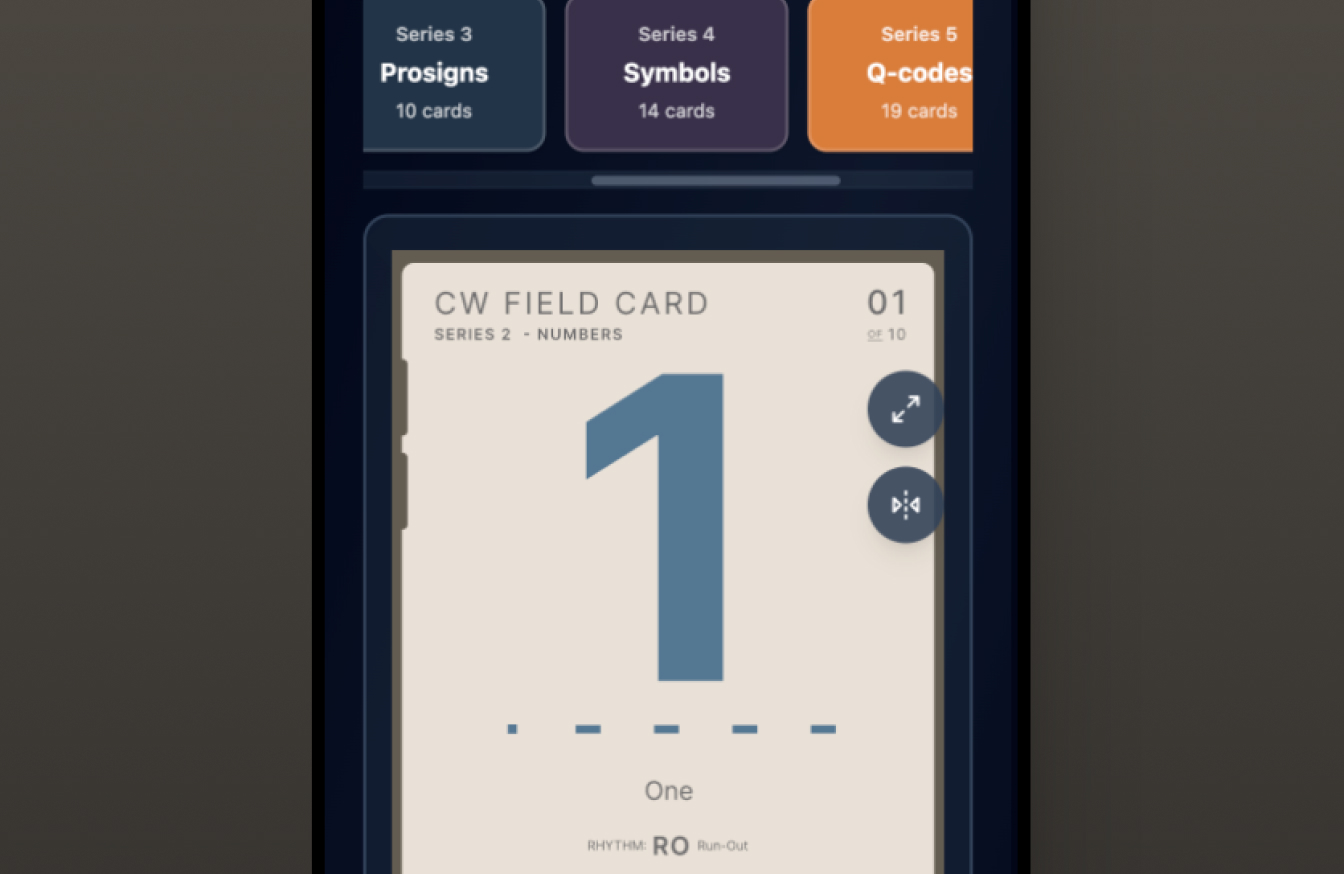
The standard model — session starts, session ends, nothing in between.
Every training tool in the category shares the same underlying model.
You open the app. You choose content. You start a session. You complete a task. You stop.
The design assumption is explicit: learning happens during active engagement. The interface is optimized for focus. Metrics measure completion rates. The loop ends when you close the app.
That model works. It's also incomplete.
The observation.
The gap between sessions — where most tools go quiet.
The platform was built by someone who was also learning on it. That created an unusual feedback loop: the designer and the learner were the same person, which meant observations from daily use became direct product signals.
The observation that mattered: progress didn't track with session length. It tracked with how much time the sound of the skill had been present in the environment.
Days with more of it in the background (even passively, even without focused attention) produced measurably different results. Characters that had required active recall were surfacing without effort. Not because of more drilling. Because of more exposure.
This is a documented pattern in language acquisition: exposure and familiarity build the substrate that deliberate practice then accelerates. Most training tools optimize for the deliberate practice part. None were doing anything about the exposure part in a training environment.
That gap was a design problem worth solving.
The operator parallel.
Experienced operators have always known this.
How experienced practitioners actually learned (not through apps, but through the community that's been practicing this skill for over a century) revealed a pattern.
Operators leave the radio on. Not always actively copying. Sometimes just listening while doing other things. Morse code present in the background. Familiar patterns surfacing without effort.
This isn't a workaround. It's a recognized part of how the skill develops at the expert level. Exposure builds pattern recognition below conscious attention. You start hearing the rhythm of a character before you can consciously identify it.
The existing tools weren't designed for this. They required full attention, by design. The goal was something closer to leaving the radio on.
The design challenge.
How do you design a learning experience that remains valuable when the learner may not be looking at the screen?
This is a different question than most interface design asks. Standard interaction design assumes a present, attentive, responsive user. The feedback loop assumes the learner is watching.
Designing for peripheral attention means the content has to work without that feedback loop. The sequencing has to make sense whether the learner is watching or not. The pacing has to accommodate someone who might glance at the screen, look away for five minutes, and glance back. The visual reference has to be readable in a half-second, not a focused read.
Most educational products optimize for:
- Engagement
- Completion
- Session time
- Interaction
This required optimizing for something different:
- Exposure
- Familiarity
- Recognition
- Comfort
Different success conditions require different design decisions.
What was built.
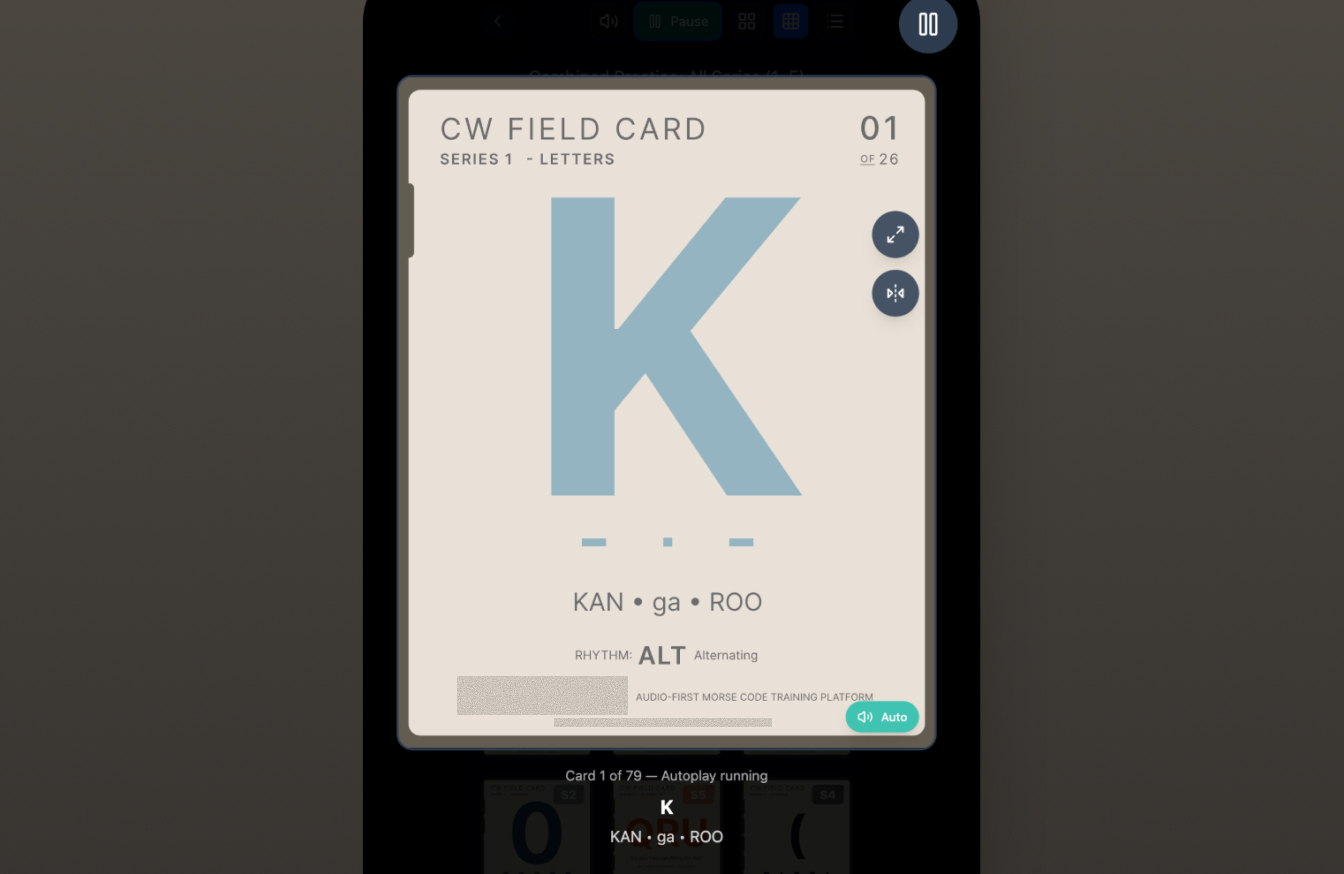
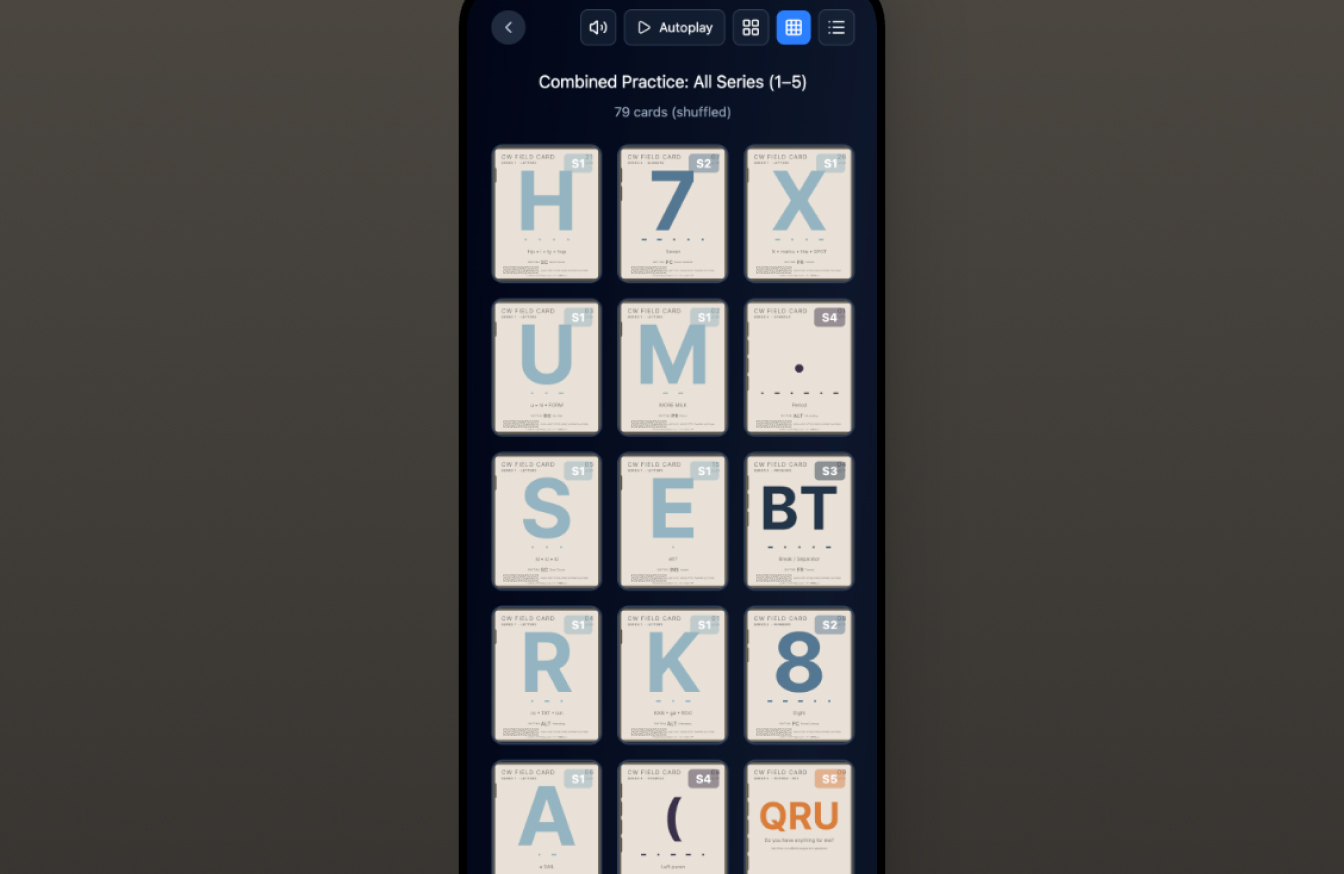
Ambient mode running — the whole character set, nothing required.
The result was a mode built around four interlocking decisions.
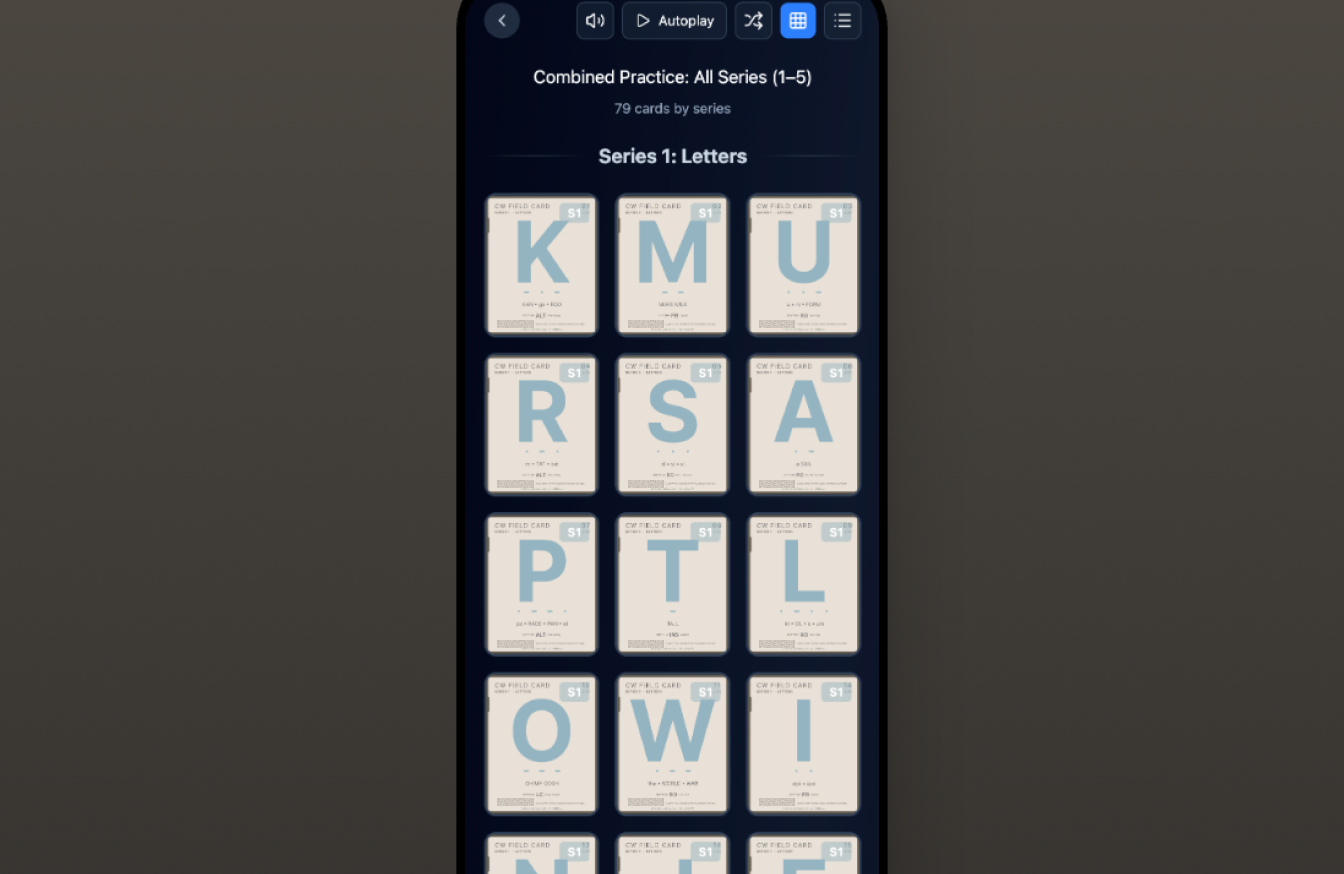
Full content library. Rather than requiring a learner to choose a specific character set or practice mode, the mode draws from the full content library: letters, numbers, prosigns, symbols. The learner doesn't have to decide what to hear next. The system decides.
Shuffle. Content is randomized rather than sequential. This prevents habituation: the anticipatory pattern-matching that lets you predict the next item rather than actually recognize it. Shuffle keeps every item genuinely unknown.
Autoplay. Each item advances automatically after a short interval. No tap required to continue. The learner can set it running and step away. This is the core enabling decision: without autoplay, every advance requires attention, which defeats the ambient purpose.
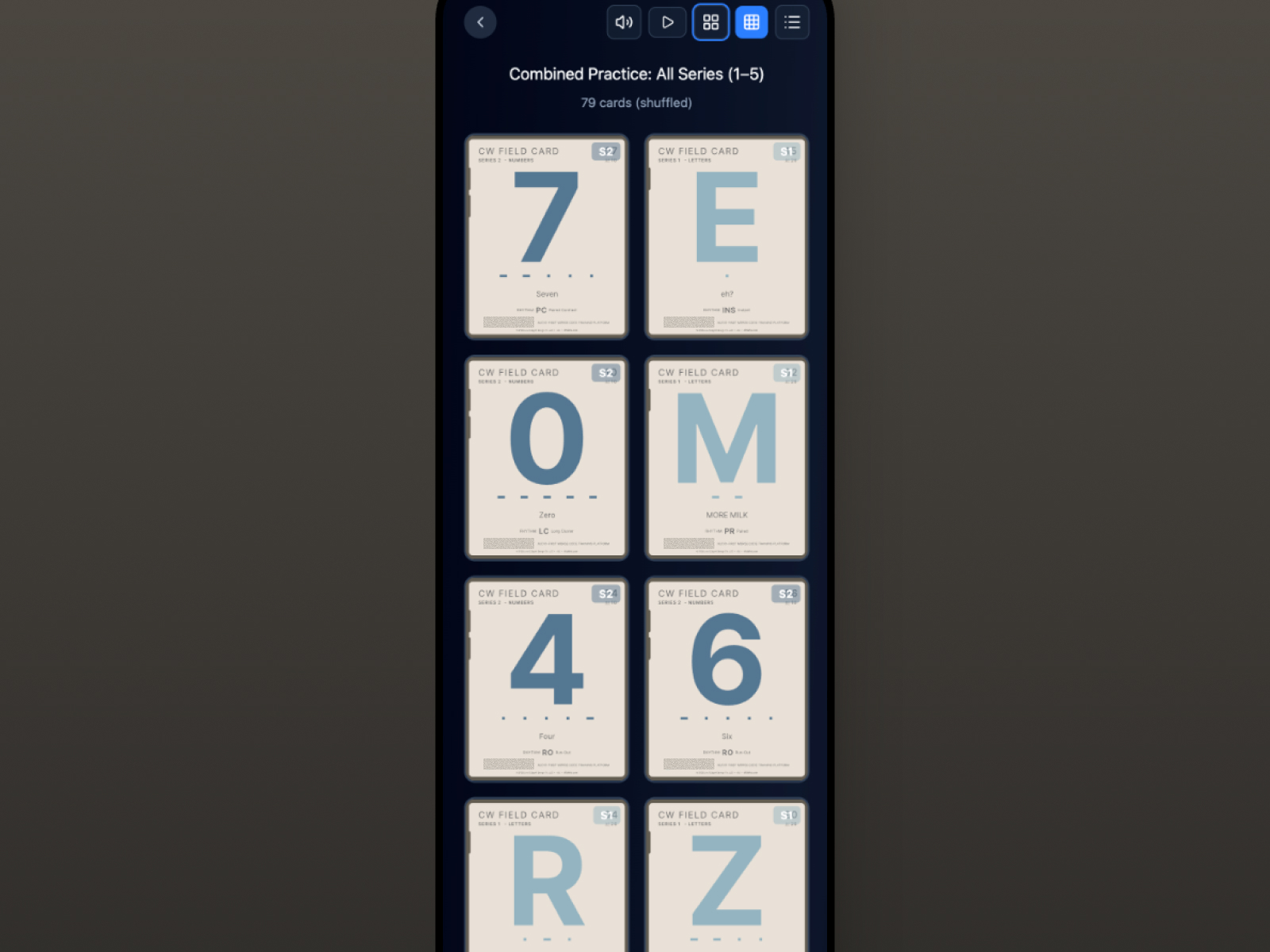
Visual reference card. Each playing item is displayed on screen: the character, its code pattern, and a mnemonic where available. A learner who glances gets instant context. A learner who doesn't glance misses nothing critical: the audio carries the content independently.
Together these four decisions create something that didn't previously exist in the tool landscape: a Morse training environment that can run usefully in the background of daily life, requiring zero interaction and rewarding whatever attention the learner has available.
What the data will say.
Instrumentation was added specifically to measure how this mode is actually used in practice.
The key behavioral question isn't whether the feature works in the designed sense: it's whether learners actually use it as ambient audio, or whether they treat it like any other interactive session. Those are different behaviors and they tell different stories about whether the design hypothesis is correct.
If long passive sessions emerge (learners running the combined series for 15, 20, 30 minutes with few screen interactions), that's evidence the ambient design is working as intended. If learners interact frequently despite autoplay being enabled, the feature may be useful in a different way than hypothesized.
Either answer is worth knowing. Building the measurement system before drawing conclusions was the same discipline that shaped CS4. The instrumentation will tell the story this section can't yet tell.
Outcomes
The feature is live in active beta use. Session duration and passive engagement patterns are being tracked as primary indicators. Early signals suggest learners are running combined series sessions significantly longer than typical focused practice sessions, consistent with the ambient listening hypothesis. Data collection is ongoing and this section will grow as that data accumulates.
When listening becomes practice, the app learns to teach when you're not looking.
One question led to another...
If listening itself can become practice, what kind of learning system has to exist first to make that possible?